
Introduction
2026 will not be just another year in your digital roadmap. It will be the moment when AI moves from side project to the central engine of business strategy.
Companies that understand how AI will redefine digital transformation strategies in 2026 will redesign how they plan, operate, and grow, while others struggle with slow decisions, rising costs, and stale customer experiences.
Why 2026 Is A Turning Point For AI And Digital Transformation
By 2026, AI tools will be faster, cheaper, and deeply integrated into cloud platforms, CRMs, ERPs, and data tools. At the same time, boards will push harder for measurable returns from digital budgets.
Analysts already project that AI will contribute more than 15 trillion dollars to the global economy by 2030, with a sharp acceleration from 2025 to 2027 (PwC, 2023). This pressure will force leaders to rethink how AI fits into every digital transformation initiative, not as a feature but as a foundation.
To stay ahead, you must look at How AI Will Redefine Digital Transformation Strategies in 2026 across strategy, operations, customers, data, and new revenue models.
5 Ways AI Will Redefine Digital Transformation Strategies in 2026
1. From Static Roadmaps To Living AI Driven Strategies

Most digital transformation roadmaps are fixed slides and annual plans. In 2026, AI will enable live, adaptive roadmaps. AI systems will scan performance data, market signals, and customer behaviour, then suggest where to invest, pause, or pivot.
Action now:
Start feeding your existing project and performance data into an analytics or AI planning tool. Ask it to highlight underperforming initiatives and suggest scenarios for budget shifts.
Benefit:
Leaders gain real time visibility and can reallocate spend in weeks instead of quarters, improving ROI and reducing sunk costs.
2. Hyper Personalised Customer Journeys At Scale
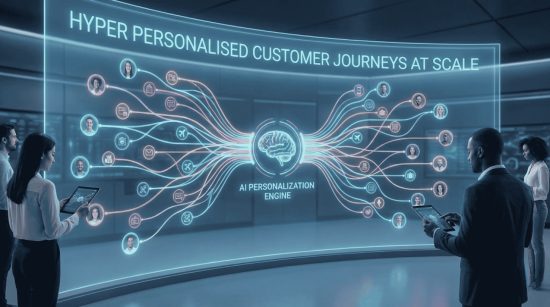
In 2026, AI will reshape digital experiences into dynamic, one to one journeys. Websites, apps, and campaigns will adapt content, offers, and timing in real time based on behaviour, history, and intent.
Micro case:
Imagine a mid sized retailer. Today, they send the same email to 100,000 subscribers. By 2026, their AI engine predicts each customer’s next likely purchase, adjusts product recommendations on the site, and launches tailored offers within minutes of customer activity. Revenue per user climbs while marketing spend stays flat.
Action now:
Implement basic AI driven segmentation in your CRM or marketing platform. Start with one high value journey, such as onboarding or win back campaigns.
Benefit:
Higher conversion rates, improved customer lifetime value, and more relevant engagement with less manual work.
3. AI First Operations And Automation Across The Value Chain
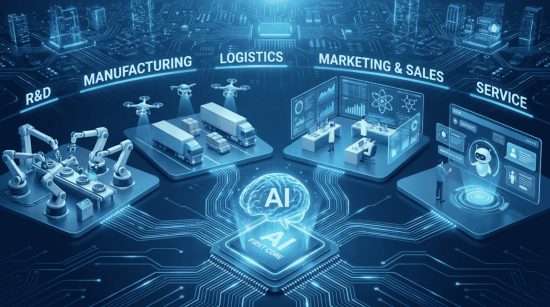
Automation will move from isolated bots to AI first operations. In 2026, AI will coordinate workflows across sales, finance, supply chain, IT, and support. It will route tasks, draft responses, trigger approvals, and detect exceptions before they become problems.
This is where How AI Will Redefine Digital Transformation Strategies in 2026 becomes very practical: you will design processes assuming AI handles the routine, while people focus on exceptions and innovation.
Action now:
Identify the top 5 repetitive tasks in one function, such as finance or customer support. Pilot AI tools to automate at least 2 of them, starting with tasks that use structured data and clear rules.
Benefit:
Reduced cycle times, fewer errors, and freed up capacity that you can redirect to higher value activities.
4. Data Governance And Risk As A Strategic Advantage

By 2026, regulators and customers will expect clear rules about how you collect, store, and use data in AI systems. Companies that treat data governance as a checkbox will face delays, fines, or brand damage. Companies that treat it as a strategic asset will move faster, because their data is trusted and ready for AI.
Action now:
Create a simple data governance playbook that covers three things: what data you collect, who owns it, and how you secure and use it. Align this with every AI initiative in your digital roadmap.
Benefit:
You lower legal and reputational risk, shorten approval cycles, and give teams a clear framework to innovate with AI safely.
5. New AI Powered Business Models And Revenue Streams
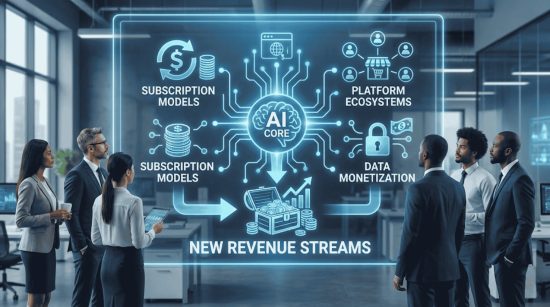
In 2026, digital transformation will not focus only on efficiency. AI will enable new products, services, and pricing models. For example, manufacturers may offer predictive maintenance as a subscription. Agencies may sell AI assisted strategy packages. Software firms may unlock premium tiers based on AI insights.
This is the most strategic part of How AI Will Redefine Digital Transformation Strategies in 2026 because it shifts digital from cost centre to revenue engine.
Action now:
Run a workshop with your leadership team and ask three questions:
- What unique data do we have?
- What problems could AI solve for our customers using this data?
- How would a customer pay for that solution: subscription, usage based, or outcome based?
Benefit:
You reveal new growth ideas that sit on top of your existing assets, rather than starting from zero.
3 Steps Leaders Should Take Before 2026
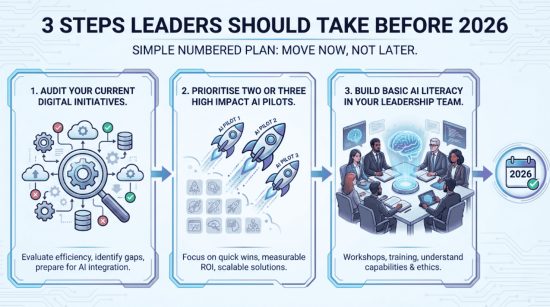
Use this simple numbered plan to move now, not later.
- Audit your current digital initiatives. Map every major project and mark where AI is already in use, where it could be added, and where it is not needed.
- Prioritise two or three high impact AI pilots. Choose pilots that are low risk, data rich, and close to revenue or cost savings. Assign clear owners and success metrics.
- Build basic AI literacy in your leadership team. Run short internal sessions on AI concepts, ethics, and use cases so that your board and senior leaders can make informed decisions.
Practical Checklist For This Quarter
Use this bullet list as a quick health check:
- One customer journey uses AI for personalisation.
- One core process uses AI based automation with clear metrics.
- Data governance rules exist and are visible to all teams.
- A simple AI use case pipeline is in place for 2025 to 2026.
- Leadership reviews How AI Will Redefine Digital Transformation Strategies in 2026 at least once per quarter.
Conclusion: Turn 2026 Into Your AI Advantage
AI will change how you plan, operate, and grow, not in theory but in daily decisions and workflows. The question is not whether How AI Will Redefine Digital Transformation Strategies in 2026 is real. The question is whether your organisation will treat it as a threat or a chance to lead.
Start with focused pilots, strong data practices, and a clear business case. By 2026, you can look back and see AI not as a buzzword but as a key driver of your competitive edge.
FAQ: AI And Digital Transformation In 2026
Q1. Why is 2026 so important for AI and digital transformation?
By 2026, AI capabilities, cloud platforms, and business pressure for ROI will align. This combination will push companies to redesign digital strategies around AI, not just add it as a tool.
Q2. How can smaller companies benefit if they lack big budgets?
Smaller firms can use cloud based AI tools that charge per use, focus on one or two high impact processes, and partner with vendors instead of building in house. The key is focus, not size.
Q3. What skills will my team need for AI driven digital transformation?
Teams will need basic data literacy, comfort with AI powered tools, and the ability to design and improve processes. You do not need everyone to be a data scientist, but you do need curious, adaptable people.
Q4. How do I measure the success of AI in my transformation roadmap?
Link each AI initiative to a clear metric such as revenue growth, cost savings, cycle time reduction, or customer satisfaction. Track results monthly and refine your roadmap based on data.
Q5. Is AI a risk to jobs in 2026?
AI will replace some tasks, especially repetitive work, but it will also create new roles in data, customer value, and innovation. Leaders should focus on reskilling and shifting people from routine work to higher value activities.